Bottom Line
NASA is using machine learning to overcome the physical degradation of solar telescopes. By training algorithms to recognize solar structures across multiple wavelengths, scientists can provide more consistent calibration than was previously possible with sounding rockets alone.
Enhancing Solar Observation with Artificial Intelligence
NASA is currently utilizing artificial intelligence techniques to improve the quality of data collected for solar research. This initiative focuses on calibrating images captured by the Solar Dynamics Observatory (SDO), a mission launched in 2010 that has provided high-definition views of the Sun for over a decade.
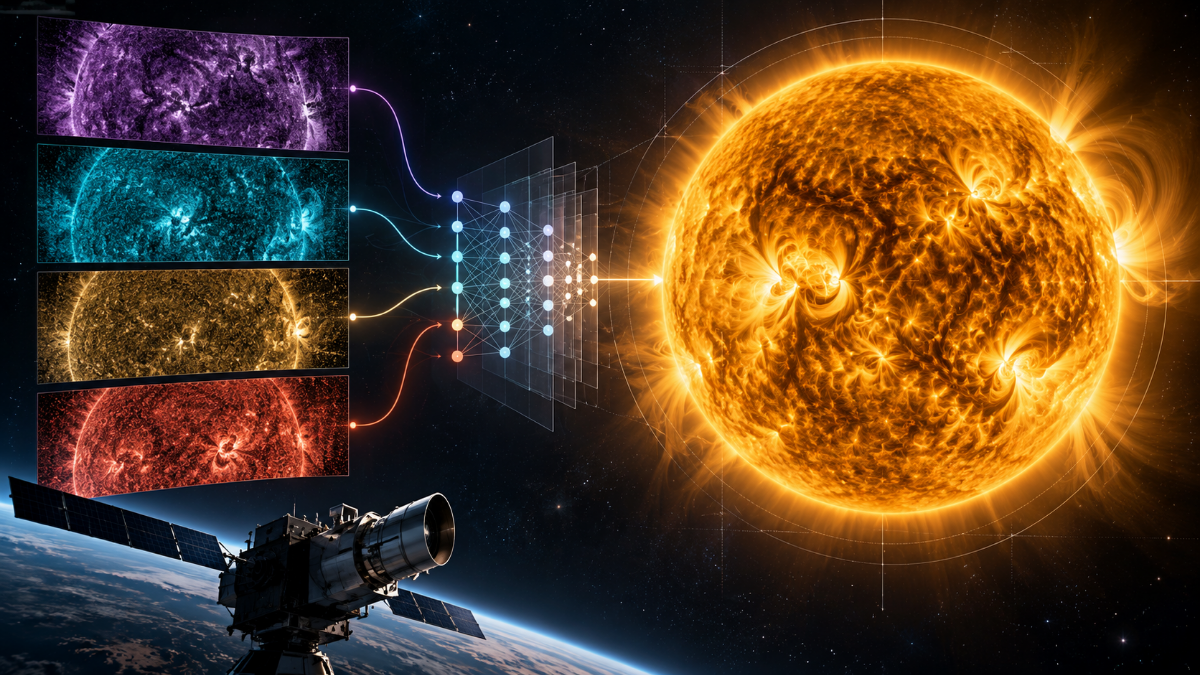
One of the primary instruments on the SDO is the Atmospheric Imagery Assembly (AIA). This instrument is designed to look constantly at the Sun, capturing images across 10 different wavelengths of ultraviolet light every 12 seconds. The constant bombardment of intense sunlight and a never-ending stream of solar particles causes the sensitive lenses and sensors of solar telescopes to degrade over time. To ensure that the data remains accurate, scientists must periodically recalibrate these instruments to understand exactly how they are changing.
Overcoming Limitations of Traditional Calibration
Historically, scientists have relied on sounding rockets to calibrate the AIA. These are smaller rockets that carry a few instruments and perform short flights into space, typically lasting only about 15 minutes. By attaching an ultraviolet telescope to a sounding rocket and comparing that data to the measurements from the AIA, scientists can make necessary adjustments to account for instrument changes.
However, the sounding rocket method has inherent drawbacks. This creates a challenge for maintaining constant accuracy. Furthermore, this method is not viable for deep space missions, which do not have the option of using sounding rocket calibration. To address these two problems simultaneously, researchers decided to explore machine learning as a solution for more constant calibration.\n
Training Algorithms for Precise Data
Machine learning requires a computer program or algorithm to learn how to perform a specific task. In this context, researchers first needed to train an algorithm to recognize solar structures and compare them using AIA data. They achieved this by providing the algorithm with images from sounding rocket calibration flights and identifying the correct amount of calibration required for those specific examples. After processing enough of these examples, the algorithm was able to identify the correct calibration needed for similar images.
Because the AIA looks at the Sun in multiple wavelengths, researchers can also use the algorithm to compare specific structures across different wavelengths to strengthen its assessments. For example, they can teach the algorithm what a solar flare looks like by showing it flares across all of the AIA’s wavelengths until it recognizes them in every type of light. Once the program can recognize a solar flare without any degradation, the algorithm can determine how much degradation is currently affecting the AIA’s images and calculate the necessary calibration for each. When comparing virtual calibration data to actual sounding rocket data, the machine learning program was accurate.
Future Applications in Deep Space
As machine learning advances, its scientific applications are expected to expand to more missions. For future deep space missions that travel to locations where sounding rocket flights are impossible, machine learning may allow these crafts to be calibrated and continue providing accurate data even as they reach greater distances from Earth or toward other stars.\n The verified publisher evidence does not establish broader claims.
Verified Source Evidence
Verified source excerpt from verified source material:
A group of researchers is using artificial intelligence techniques to calibrate some of NASA’s images of the Sun, helping improve the data that scientists use for solar research. The new technique was published in the journal Astronomy & Astrophysics on April 13, 2021. A solar telescope has a tough job. Staring at the Sun takes a harsh toll, with a constant bombardment by a never-ending stream of solar particles and intense sunlight. Over time, the sensitive lenses and sensors of
Source: NASA — Artificial Intelligence Helps Improve NASA’s Eyes on the Sun – NASA (.gov).
Source Licensing
- Source policy: NASA-MEDIA-USAGE-GUIDELINES (https://www.nasa.gov/nasa-brand-center/images-and-media/). NASA source material was used. The generated output is not attributed to the source organization. AI product attribution: Aurora AI. NASA review or permission is not implied.
Sources
1 independent organization · 1 source document. Links open the original material.