Bottom Line
The UK Government’s October 2026 note establishes that while Ukraine faces significant and concentrated humanitarian challenges in frontline regions, the country maintains a level of economic and institutional functionality that allows public services to continue operating across much of its territory. The report underscores that the humanitarian situation varies by location, with the most severe needs concentrated in specific eastern and northern oblasts.
The Verified Development
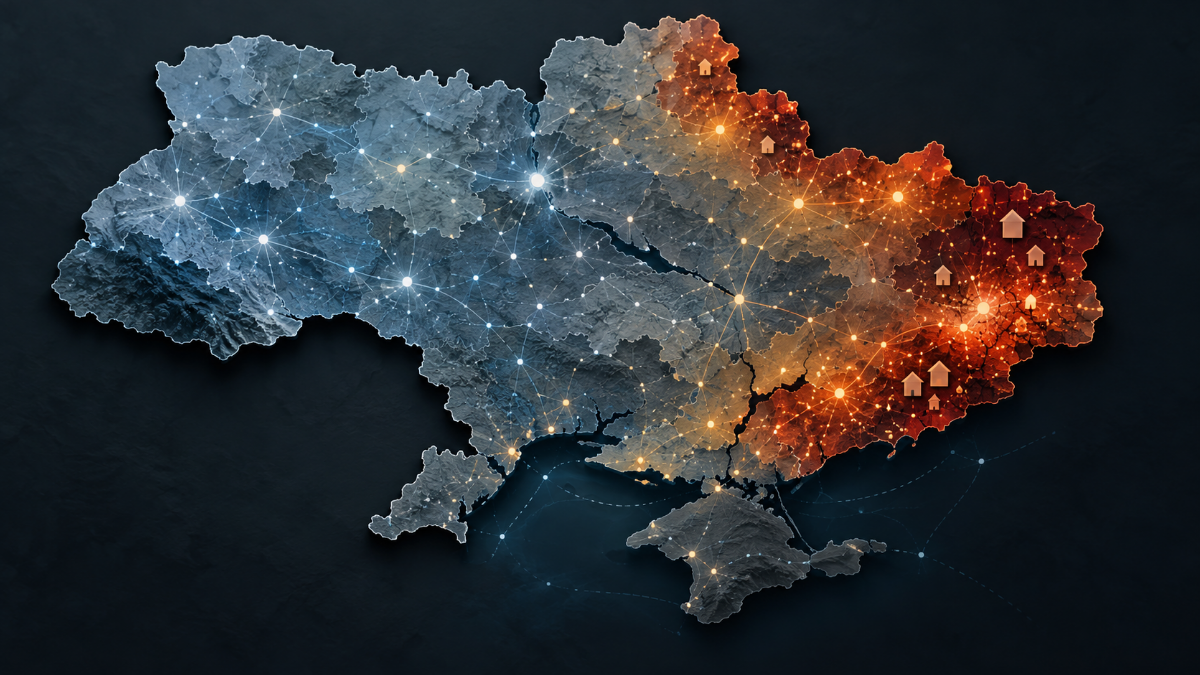
According to the GOV.UK publication, the severity of the humanitarian situation is not uniform across the nation’s geography. The most acute challenges are concentrated in frontline and conflict-affected areas located in the east, southeast, and northeast. Specifically, the report identifies Donetsk, Kherson, Zaporizhzhia, Kharkiv, and Sumy oblasts as regions where humanitarian needs are most intense. In contrast, the report notes that conditions in central and western Ukraine are generally better than those found in the frontline and border areas. The document clarifies that while approximately 10.8 million people require humanitarian assistance, these needs are primarily concentrated among populations living close to the frontline or within Russian-occupied territories.
Internal Displacement and Infrastructure
The report provides a detailed look at the internal displacement crisis within Ukraine. As of the time of writing, the country hosts an estimated 3.7 million internally displaced persons (IDPs). A substantial majority of these individuals have been displaced for more than two years. The note highlights that up to 504,000 people are projected to be newly displaced in 2026.
Furthermore, the document addresses the significant damage to residential properties, with over 300,000 homes reported as damaged or destroyed since the start of the full-scale invasion. While housing and shelter needs remain a major concern, the report emphasizes that basic requirements for food, water, hygiene, and heating are generally being met for most people through continued state support and humanitarian programs. The verified publisher evidence does not establish broader claims regarding the long-term reconstruction timeline or the final resolution of these infrastructure challenges.
Verified Source Evidence
This publication is licensed under the terms of the Open Government Licence v3.0 except where otherwise stated.
Source Licensing
- Licensed under Open Government Licence v3.0 (https://www.nationalarchives.gov.uk/doc/open-government-licence/version/3/). Attribution: Contains public sector information licensed under the Open Government Licence v3.0..
Sources
1 independent organization · 1 source document. Links open the original material.